
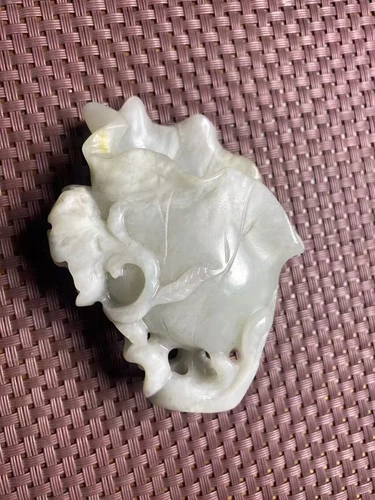
The ancient jade cup is an elegant vessel made of jade. It inherits fine craftsmanship and is born with a symbol of respect. It perfectly combines practical functions with artistic value. The history of jade cups can be traced back to the Neolithic Age. Its production technology gradually matured during the Xia, Shang and Zhou dynasties and reached its peak during the Han and Tang dynasties. The materials used to make jade cups are usually fine-textured, finely processed and pure jade, such as Hetian jade, Dushan jade or Xiuyan jade. These jades are chiseled, cut, carved and polished to become smooth and warm objects. The shapes of jade cups are diverse, ranging from simple and elegant straight tubes to gorgeously decorated flower mouths or animal shapes; common decorative patterns in the decoration include cloud patterns, dragon and phoenix patterns, and floral patterns. These patterns not only add to the beauty of the jade cup, but also give it auspicious meanings. The ancient jade cup is not only a practical vessel in the lives of the powerful and the noble, but also a symbol of dignity and status. On important occasions, jade cups are often used as sacrificial ritual vessels, representing the reverence for the gods of heaven and earth; at banquets, jade cups represent the taste and wealth of the host. In addition, jade cups are also endowed with cultural connotations, such as "a gentleman's virtue is like jade", implying the noble character of the user. In literary works, jade cups often appear as important images, representing the seashore, coral, etc. For example, Jia Baoyu's love for jade in "A Dream of Red Mansions" is exactly this cultural tradition. With the changes of the times, the practical function of jade cups has gradually weakened, but its artistic value has become increasingly prominent. Modern jade cups are mostly used for display and collection, becoming an important carrier for people to understand ancient art and collection culture. We can not only inherit the skills of ancient craftsmen, but also appreciate the pursuit of beauty and virtue in Chinese culture. As a historical monument, the jade cup carries the aesthetic taste and spiritual belief of an era. In addition to its artistic value and cultural significance, the ancient jade cup also has certain social functions. In ancient times, jade cups were often given to the royal family as tributes or gifts to express respect or consolidate relationships. For example, in historical records, many princes, nobles, and literati used jade cups as gifts to convey friendship or express loyalty. This social function makes the jade cup transcend the scope of a simple vessel and become a link connecting interpersonal relationships. At the same time, jade cups are often used as precious gifts to reward meritorious officials, symbolizing the grace and glory of imperial power.