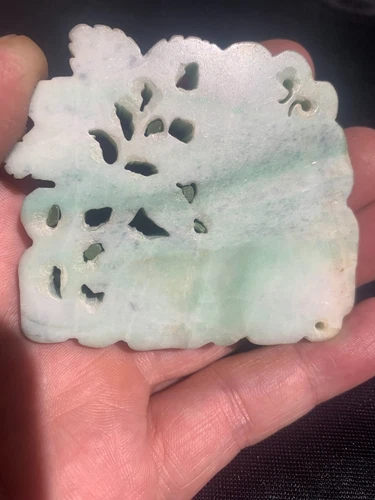
Ancient jades from the Liao and Jin dynasties in the 10th century AD are an important chapter in Chinese jade culture, reflecting the social, cultural and artistic characteristics of the time. This period was a period of coexistence and integration of various ethnic groups in northern China. Jadeware integrated the traditional craftsmanship of Han culture and the unique aesthetics of the Khitan and Jurchen ethnic groups. Jade was mainly used for ceremonial, decorative and practical purposes, symbolizing status, power and religious beliefs.
Jadeware from this period was mostly high-quality Hetian jade, with a fine and smooth texture. Common jade bi, jade pendants, jade rings, etc., also had unique carvings inspired by nomadic culture, such as animal shapes. The patterns were more vivid and diverse, using techniques such as round carving, bas-relief, and openwork, with exquisite details, showing the craftsman's superb skills.
The Liao and Jin jade decorations mostly reflected the reverence for nature and gods, such as cloud patterns, animal face patterns, bird and animal patterns, etc., symbolizing the harmonious coexistence of man and nature, and reflecting the heroic and unrestrained character of the northern nomadic peoples. Liao and Jin jades embody a unique cultural fusion, an important stage in the development of Chinese jade art, and reflect the rich cultural exchanges at that time.