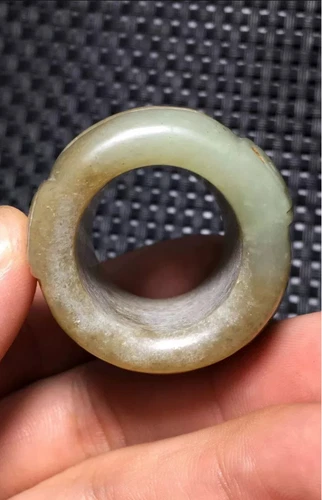
A Chinese jade ring from the 7th century BC is one of the earliest examples of jade craftsmanship, demonstrating the reverence that ancient cultures had for this precious material. During the Zhou dynasty, jade was highly valued for its spiritual significance, and people believed it had protective and auspicious properties. This jade ring was likely used as a personal ornament or a ceremonial item, demonstrating the importance of jade in daily life and ritual.
The jade rings from the 7th century AD are exquisitely crafted, reflecting the advanced craftsmanship of the time. The rings are usually round, with smooth edges and a polished surface, highlighting the natural beauty of the jade. The jade comes in a variety of colors, with green, white, and even pale yellow being common. The rings are often made of nephrite, known for its toughness and smooth texture, and the fine jade used during this period may have come from areas such as what is now Xinjiang or Jilin.
This jade ring is not only an ornament, but also symbolic. In ancient Chinese culture, jade was associated with virtues such as purity, longevity, and protection. It was often buried with the dead as a symbol of their entry into the afterlife, or worn during ceremonies to pray for blessings and protection from the gods. This ring was probably worn by an elite individual, such as a noble or member of the aristocracy, to indicate their status and spiritual connection to the gods.
This 7th century BC jade ring bears witness to the early development of Chinese jade craftsmanship, which flourished in the later imperial era. It has lasting significance as a work of art and cultural symbol, and is an important part of China's rich artistic heritage. This ring continues to fascinate collectors and historians for its exquisite beauty and profound symbolism.